
Automating CIBIL UCRF / TUDF Reporting for Lenders in India
Rahul Raj
1/2/20262 min read

What Is CIBIL UCRF / TUDF Reporting?
All regulated lenders in India are required to submit borrower and loan performance data to TransUnion CIBIL on a periodic basis. This data must be reported strictly in UCRF (Uniform Credit Reporting Format) or TUDF (TransUnion Data Format) as prescribed by CIBIL and regulatory guidelines.
These formats are non-negotiable. Even minor structural or sequencing errors can result in file rejection.
Why Manual CIBIL Reporting Is a Growing Risk
Despite the importance of bureau reporting, many banks, NBFCs, and fintech lenders still rely on manual processes to prepare UCRF / TUDF files.
A typical manual workflow involves:
Extracting data from LMS, CBS, databases, or Excel files
Manually mapping internal fields to CIBIL’s rigid schemas
Multiple validation and correction cycles
Dependency on a small number of individuals familiar with the format
As loan portfolios scale, these processes lead to:
High monthly operational effort
Increased probability of reporting errors
Delays that can trigger compliance and audit observations
Manual UCRF / TUDF preparation does not scale safely.
The Case for Automating CIBIL UCRF / TUDF Reporting
Leading lenders are now treating credit bureau reporting as compliance infrastructure, not a back-office task.
Automation helps ensure:
Consistency across reporting cycles
Reduced dependency on individuals
Faster submission timelines
Improved audit readiness
This shift is becoming essential as regulatory scrutiny increases and reporting volumes grow.
How ViHaze Automates UCRF / TUDF File Generation
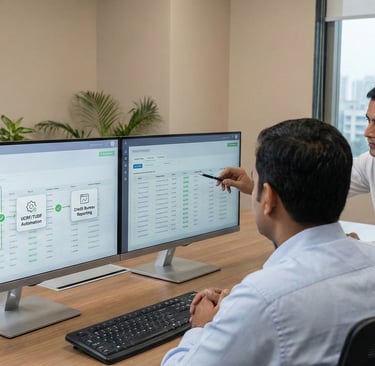
ViHaze Technology Solutions provides an AI-led automation layer that converts internal lender data into CIBIL-compliant UCRF / TUDF files.
At a high level, the workflow looks like this:
LMS / CBS / Excel / Databases
→ AI-assisted data mapping aligned to CIBIL specifications
→ Rule-based validations and exception checks
→ Submission-ready UCRF / TUDF files generated on schedule
The solution works alongside existing systems and does not require core platform changes.
Business Impact of Automated Bureau Reporting
Lenders adopting automated UCRF / TUDF reporting typically experience:
Significant reduction in manual effort
Fewer format-level rejections
Predictable, on-time CIBIL submissions
Better documentation for internal audits and regulatory reviews
Automation allows compliance and risk teams to focus on oversight rather than file preparation.
Why This Matters for NBFCs and Fintech Lenders
As portfolios grow and reporting complexity increases, manual bureau reporting becomes an operational bottleneck. Automated CIBIL reporting enables lenders to:
Scale safely
Reduce regulatory risk
Improve internal controls
Maintain consistency across reporting cycles
In a regulated environment, reliability matters as much as speed.
Download the Detailed Case Study
This article covers why automation is needed and what automated CIBIL reporting looks like at a high level.
For a deeper, practical view — including:
Before vs after comparison
Effort saved in man-days per month
Internal workflow changes
Compliance and audit benefits
you can download the full one-page case study below.
Download the ViHaze CIBIL UCRF / TUDF Automation Case Study (PDF)